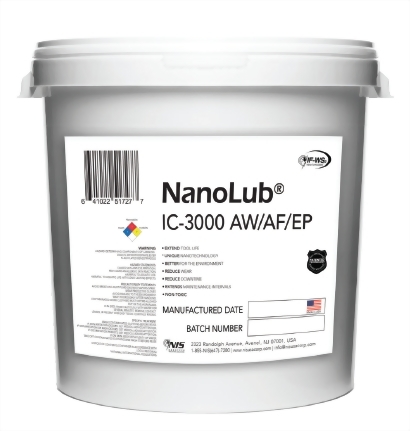
Nanolub® IC-3000 AW/AF/EP Additive is formulated using advanced nanotechnology.
It is soluble in various pure oils, including mineral oil, naphthenic oil, and synthetic oils.
This additive combination exhibits excellent extreme pressure properties, delivering outstanding anti-wear performance even under high loads, and provides a superior surface finish compared to traditional metalworking fluids.
NanoLub® employs a unique patented technology that incorporates solid molybdenum disulfide (WS2) multi-layered, fullerene-like nanoparticles.
These unique multi-layered IF-WS2 nanoparticles demonstrate exceptional temperature resistance, ranging from -270°C to 450°C, as well as remarkable impact resistance of 5,076,000 PSI and pressure resistance of 4,263,000 PSI.
They remain multifunctional even in the most extreme working conditions, including high and ultra-low temperatures, high pressure and vacuum, heavy loads, high speeds, intense radiation, and corrosive environments.
Industrial Applications
Exclusive Technology
NanoLub® is formulated using proprietary technology that incorporates solid molybdenum disulfide (WS2) in the form of multi-layered, fullerene-like nano particles.
These unique multi-layered IF-WS2 nanoparticles are renowned for their exceptional resistance to temperature (ranging from -270°C to 450°C), impact (up to 5,076,000 PSI), and pressure (up to 4,263,000 PSI). This remarkable durability enables them to function effectively under extreme conditions, including high and ultra-low temperatures, elevated pressure and vacuum, significant loads, high speeds, intense radiation, and corrosive environments.
Due to their size (50-200 nm) and the morphology of IF-WS2 nanoparticles, they effectively fill the irregularities and rough surfaces of metals, offering excellent load-bearing and anti-wear properties. Under high loads (> 1 GPa), the surface layer detaches from the balls, creating a thin protective layer of WS2 on the metal surface. Additionally, the friction film flakes fill in and smooth out the damaged surface, thereby reducing friction and wear between the metals.

Test Results


Technical Specifications